
Althea’s Points of Sail
The points of sail describe Althea’s direction relative to the wind. As Althea changes her heading, the sails must be adjusted to maintain the proper angle of attack—the angle between the wind flowing across the sail and the sail’s surface. On a close-hauled course, Althea will sail as close to the wind as possible, with the sails pulled in or trimmed in tightly. As the boat turns farther away from the wind onto a beam reach, broad reach, or run, the sails are eased out to match the changing wind angle and continue producing efficient lift ( as discussed in previous lessons).
The angle of attack is one of the most important concepts in sailing because it determines how effectively the sail generates lift. If the angle of attack is too small, the wind flows smoothly around the sail, but there is not enough lift to produce maximum power.
By understanding the relationship between the points of sail and the angle of attack, we can trim our sails efficiently, maximize boat speed, and even sail upwind by tacking from one close-hauled course to the other.
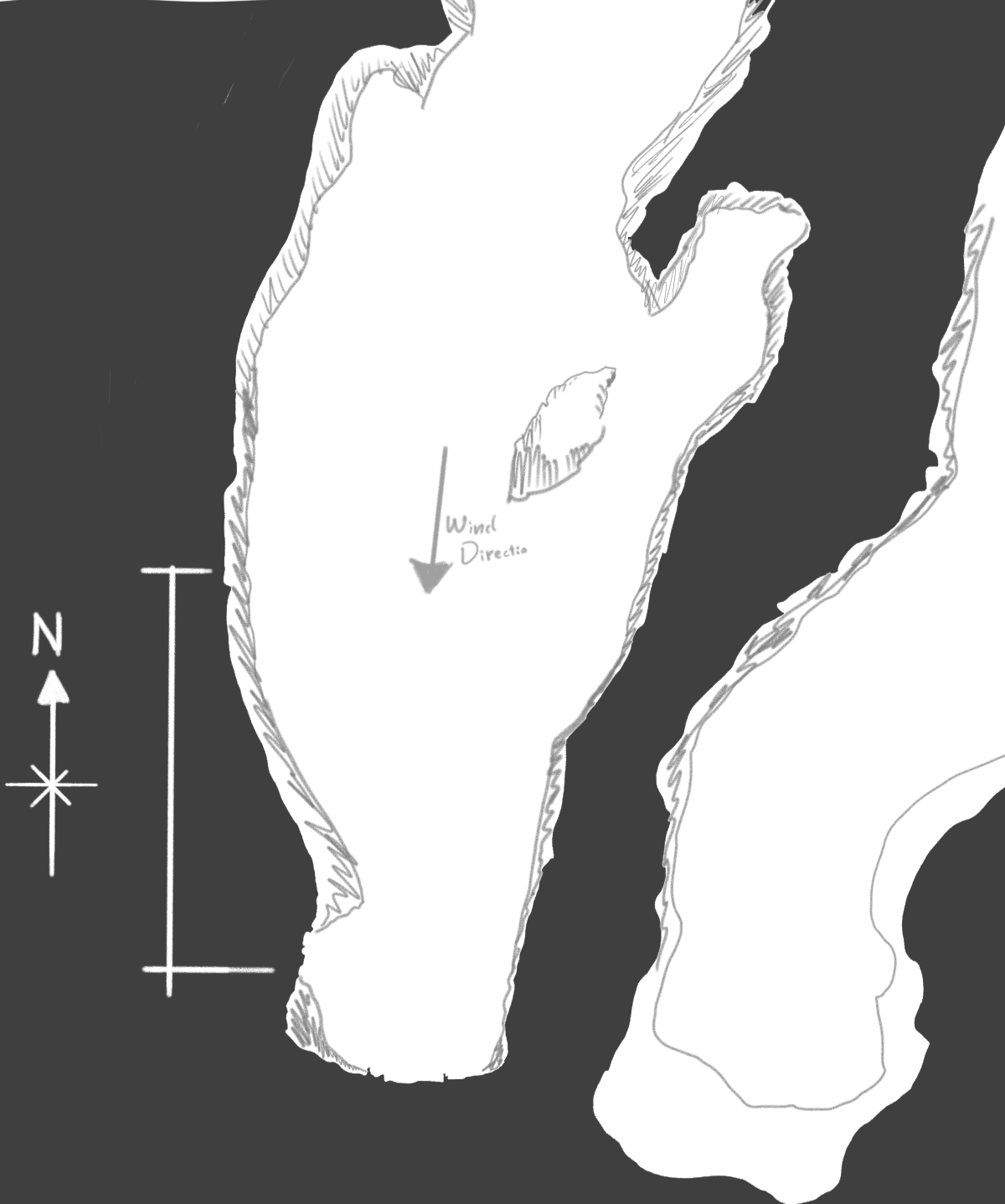
How Althea can sail in the direction of the wind.
Althea cannot sail directly into the wind, but she can make progress upwind by sailing at a close angle to the wind ( close hauled) and changing direction periodically or tacking. This is called beating to weather or tacking upwind. If the wind is blowing from the north to the south down Grand Traverse Bay, Althea must make short tacks at angles to the north breeze if she wants to go up the bay.
Its like climbing a steep hill on a bicycle. Instead of riding straight up, you ride diagonally back and forth across the slope because it’s more efficient. Althea does the same thing with the wind.